
Greyhound Trap Bias Guide: Track-by-Track UK Analysis
 Available in US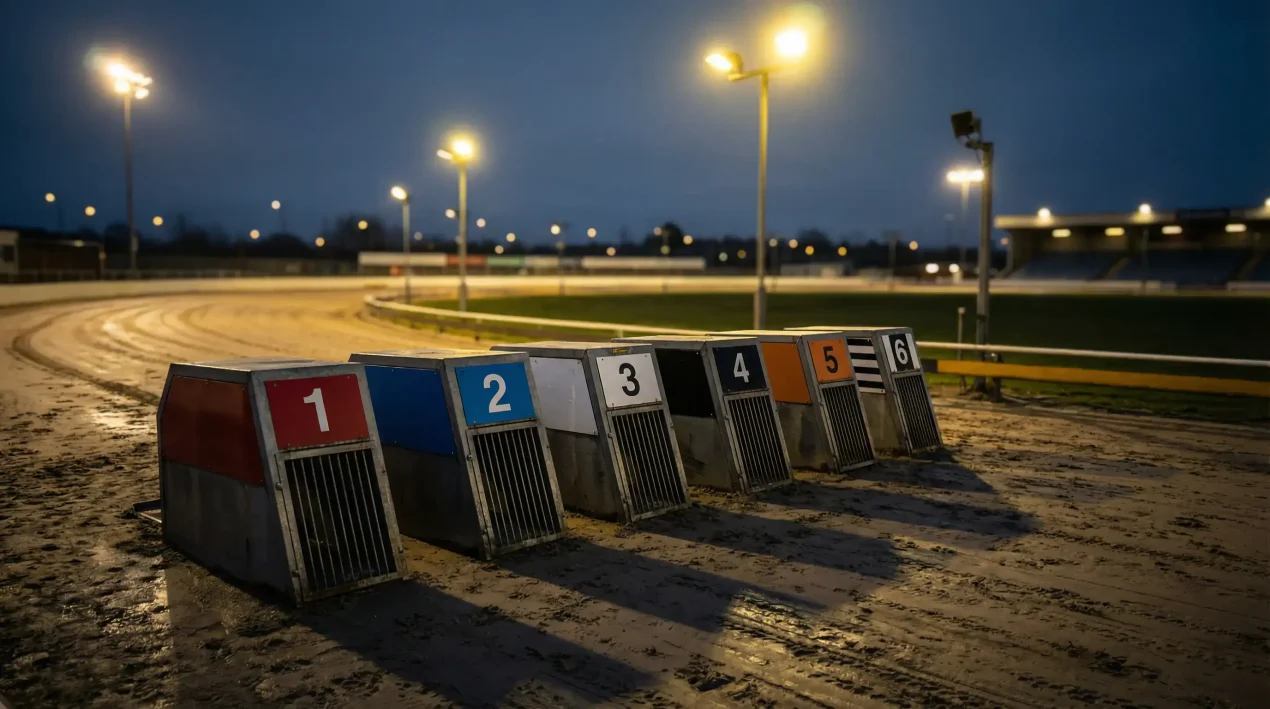
Contents
The Science of Trap Bias
Trap bias isn’t superstition—it’s geometry playing favourites. Every UK greyhound track is an oval with bends, straights, a mechanical hare running on a rail, and six starting traps spaced across the track width. These physical characteristics are not symmetrical, and the asymmetry produces measurable, repeatable advantages for certain starting positions. Understanding why those advantages exist, and how to exploit them, is one of the most accessible edges available to greyhound bettors. Get more race analysis at greyhoundbettingsystem.
In a perfectly neutral race, each of the six traps would win approximately 16.7% of the time over a large enough sample. In reality, that figure varies significantly. At some tracks and distances, trap 1 wins over 22% of races. At others, trap 6 outperforms. The deviation from the expected baseline is not random noise—it is a structural consequence of how the track is built. The distance from each trap to the first bend determines which dogs reach clear racing room earliest. The position of the hare rail (inside or outside) influences how dogs run through the turns. The camber of the bends, the width of the track at critical points, and even the angle at which dogs exit the traps all contribute to a bias that, once identified, persists across hundreds of races until something physical about the track changes.
The hare system itself plays a role that many punters overlook. On tracks where the hare runs on the inside rail, dogs drawn in the lower traps (1 and 2) are closer to the lure from the start and can settle into a racing rhythm earlier. On outside-rail tracks, the dynamic inverts partially, though the inside still retains a geometric advantage through the bends because the shortest path around a curve is always on the inside. Wind direction, which affects hare speed and therefore the pace of the race, adds another variable—but it is the fixed geometry of the track that produces the consistent, exploitable bias.
Trap bias is not a theory. It is an observable, measurable phenomenon supported by decades of results data. The question is not whether it exists, but whether you are using it.
How to Identify Trap Bias
The stats tables do the heavy lifting—you just need to read them. Identifying trap bias requires no proprietary software, no subscription to expensive data services, and no advanced statistical training. It requires access to results data, a basic understanding of percentages, and the patience to let the numbers accumulate.
The primary data source for UK greyhound trap statistics is the Racing Post, which publishes cumulative trap performance data for every GBGB track, broken down by distance. Specialist sites like GreyhoundStats.co.uk aggregate this data into more accessible formats, often with filtering options that let you examine trap performance over specific time periods, by grade, or by meeting type. The raw material is freely available. The edge comes from actually using it.
What you are looking for is simple: any trap whose win percentage sits meaningfully above the 16.7% baseline over a sample of at least 200 races at a given distance. A trap winning 18% of the time over fifty races is within normal variance. The same trap winning 22% over five hundred races is a genuine bias. Sample size matters enormously here—small samples produce noisy data that can mislead, while large samples smooth out variance and reveal the underlying structural advantage. As a working rule, treat anything below 150 races as preliminary and anything above 300 as reliable.
Equally useful is the losing-run data: how many consecutive races has a particular trap gone without a winner? A trap whose longest losing run is fifteen at a track where it has a 22% win rate is performing consistently. A trap with the same win rate but a losing run of forty suggests the bias may be concentrated in specific conditions (evening meetings, wet tracks, particular grades) rather than being universal. This distinction matters because a conditional bias requires more work to exploit—you need to identify when the conditions are present, not simply back the trap blindly.
Building your own records is the most reliable approach, even if published data is available. A spreadsheet tracking date, race distance, trap, finishing position, going conditions, and grade for every race at your chosen track gives you a personalised dataset that you understand intimately. It also allows you to detect shifts in bias before published aggregate statistics catch up—after track maintenance, resanding, or changes to the hare system, trap bias can shift materially, and the punter who spots the shift first has a window of advantage before the market adjusts.
Track-by-Track Bias Analysis
Every track has its tells. While trap bias exists at every UK greyhound venue, the nature and degree of that bias varies considerably, and treating all tracks as interchangeable is one of the most common mistakes punters make.
Romford is the textbook example of inner-trap dominance. Trap 1 has historically produced win rates well above 20% over standard distances, and the effect intensifies in sprint races. The bias is not subtle—it is visible in even modest sample sizes and persists across grades and meeting types. At Romford, the geometry is the dominant factor, and any form analysis that ignores the trap draw is incomplete.
Crayford presents a different profile. The track is slightly more galloping in nature, with longer straights that allow dogs to recover from a slow start or a wide draw. The inner-trap advantage still exists but is less pronounced than at Romford, particularly over the longer 540-metre trip where the additional distance dilutes the first-bend advantage. Outside traps at Crayford can perform respectably when occupied by proven wide runners with strong early pace.
Nottingham is one of the fairest tracks in the country in terms of trap bias, partly because its more spacious layout reduces the geometric penalty for wider-drawn dogs. The bias here tends to be more conditional—dependent on going conditions and the specific grade of the race—rather than structural. This makes Nottingham a track where form analysis and running-style matching carry relatively more weight than raw trap statistics.
Towcester, with its spacious oval layout and wide bends, distributes the advantage differently again. The generous track width and sweeping turns partially neutralise the consistent inner-rail advantage seen at tighter circuits. Here, early pace and stamina matter more than trap draw alone, though inside traps still hold a marginal edge at the first turn. The key takeaway is that bias data from one track tells you nothing about another. Each venue demands its own analysis built from its own results.
Using Trap Bias in Your Betting
Bias alone isn’t enough—combine it with market validation. Knowing that trap 1 wins 23% of the time at your local track is useful information. Backing trap 1 blindly in every race is a strategy that will produce long losing runs, frustration, and a steadily shrinking bank. The difference between knowing about bias and profiting from it lies in how you filter your selections.
The strongest signal occurs when trap bias aligns with market support. If a dog drawn in a historically favoured trap is also the market favourite or a strong second favourite, two independent sources of information are pointing in the same direction: the structural advantage of the trap and the collective assessment of the betting market. This convergence does not guarantee a winner—nothing does—but it identifies situations where the probability of success is meaningfully higher than average. Over a sufficient sample, consistently backing these convergence spots should produce positive returns, provided you are disciplined about rejecting races where the signals conflict.
When to back: a biased trap holding a dog whose form, running style, and pace profile suit the draw. The ideal scenario is a fast-breaking railer in trap 1 at a track with a proven inner-trap bias, running at a distance where the first-bend advantage is most pronounced. When to avoid: a biased trap holding a dog whose running style contradicts the position. A wide runner drawn in trap 1 at Romford may technically occupy the statistically favoured trap, but its natural inclination to swing wide through the first bend negates the geometric advantage entirely.
Consider a practical example. At a track where trap 2 wins 21% of standard-distance races, a dog is drawn in trap 2 with a running style marked as railer, a first-bend split among the fastest in the field, and a price of 3/1 in a competitive six-dog race. The trap bias favours it. The running style suits the draw. The pace profile suggests it will reach the first bend in a forward position. The price offers value relative to a 21% baseline. Each factor alone is insufficient. Together, they describe a selection worth backing.
Contrast that with the same trap holding a dog returning from a long absence, drawn against two faster breakers from adjacent traps, priced at 6/4 as a cramped favourite. The trap bias is present, but the form context weakens the case, and the short price offers no margin for error. Recognising when to pass is as important as recognising when to act.
Weather Impact on Track Conditions
Weather doesn’t just affect dogs—it reshapes the entire track. A greyhound track in bright sunshine on a July evening runs fundamentally differently from the same track on a wet Tuesday in November, and the punter who ignores conditions is working with outdated information regardless of how carefully they have studied the form.
Rain is the most significant weather variable. Light rain dampens the sand surface, providing better grip and often producing faster times because dogs can push off more effectively through the bends. This benefits inner traps disproportionately: the improved grip reduces the centrifugal sliding that normally affects dogs on the tightest racing line, effectively amplifying the existing geometric advantage of inside positions. On a dry track, dogs railing hard through bends may slide slightly wide under centrifugal force, losing fractions of a second. On a damp track, they hold their line more cleanly.
Heavy, persistent rain changes the equation. Once a track becomes waterlogged, the surface deteriorates unevenly—typically faster in the areas that receive the most traffic, which tend to be the inside lanes and the apex of bends. Waterlogged inside lanes can become heavy and holding, slowing dogs that would normally benefit from railing. In extreme conditions, the outside of the track may offer firmer, faster ground, temporarily inverting the usual inner-trap advantage. These inversions are rare but profitable for those who anticipate them, because the market’s pricing still reflects the default bias rather than the adjusted conditions.
Dry, hard ground produces the fastest overall times but increases the risk of interference. When the surface is firm, dogs run at peak speed, and the closing speeds at the bends increase, meaning that any crowding or bumping produces more dramatic consequences. Races on fast ground tend to favour front-runners who avoid the congestion behind them, and the bias toward inside traps can intensify because the speed differential through the first bend is magnified.
Wind is the least discussed but far from negligible factor. Strong headwinds into the home straight slow the hare, which in turn affects the pace of the race—dogs can run up on the lure, bunching the field and increasing interference. Tailwinds have the opposite effect, stretching the field and rewarding dogs with natural stamina. Crosswinds at exposed tracks like Towcester can push dogs off their preferred running lines, introducing an element of randomness that makes form analysis less reliable. Checking the weather forecast before assessing a card is not obsessive—it is practical due diligence.
Wet Track Strategy
Wet tracks reward those who adjust. When rain arrives, the punter who recalibrates has an immediate advantage over the majority who simply apply dry-track form without modification.
The first adjustment is to favour railers in inside traps more heavily than you would on dry ground. The improved grip on a damp surface means that a dog holding the rail through the bends loses less momentum than on a dry, slippery surface. If your default approach already accounts for trap bias, a wet track justifies increasing your confidence in inside-drawn railers by a meaningful margin.
The second adjustment concerns dogs with proven wet-track form. Some greyhounds perform significantly better on rain-affected surfaces—their stride pattern, weight distribution, or running style suits the altered conditions. The racecard will not tell you this directly, but cross-referencing a dog’s best performances with the going conditions on those dates reveals the pattern. A dog that produced its two fastest times on evenings when rain was reported is telling you something valuable. Building a personal note file of wet-track specialists at your chosen venue takes time but pays dividends every time the forecast turns grey.
The third adjustment is to expect more interference in races on heavy ground. Waterlogged patches create unpredictable footing, and dogs encountering a soft spot at speed can check, stumble, or veer into neighbouring runners. This increases the variance of outcomes, which has a practical implication for bet selection: on heavy ground, reduce your stakes or restrict your bets to races where a clear pace advantage suggests one dog will be in front before the trouble starts. The front-runner on a heavy track avoids the chaos behind—and the chaos behind is more chaotic than usual.
Seasonal Patterns
The calendar affects the track in ways that extend beyond simple weather. UK greyhound racing operates year-round, but the character of racing changes with the seasons, and adjusting your approach accordingly sharpens your edge.
Summer evening meetings run on warm, dry surfaces that tend to produce fast times and clean racing. The longer daylight hours mean evening cards start later, and the track has had a full day to dry after any morning maintenance watering. Dogs are racing on surfaces at their firmest, which typically intensifies the bias toward early pace and inside traps. Summer is also when the highest-quality open races and major competitions take place, attracting stronger fields and sharper market pricing.
Winter racing presents a different challenge. Shorter days push some meetings into afternoon slots, and the ground is softer, slower, and more affected by rain and frost. Dogs carrying winter coats may run fractionally slower, and the heavier going saps stamina over longer distances. Form from summer months should be treated with caution during winter—a dog that produced 29.30 over 480 metres in July is unlikely to reproduce that time on heavy ground in January, and expecting it to do so leads to mispriced bets.
Afternoon BAGS meetings, which run throughout the year but dominate the winter schedule, tend to feature slightly lower-grade competition than evening cards at the same track. The market for these meetings is thinner, and the form can be more volatile, which creates both risk and opportunity. Seasonal awareness does not require complex modelling—simply noting the time of year and adjusting your expectations for times, going conditions, and field quality keeps your analysis grounded in reality rather than assumption.
Individual Track Profiles
Know your track before you back your dog. Each of the GBGB-licensed venues in the UK has a distinct personality shaped by its dimensions, surface, hare system, and local conditions. Specialising in one or two tracks is far more productive than spreading your attention across the entire circuit.
Romford is the quintessential sprinter’s track. The tight 350-metre circumference circuit leaves almost no margin for error at the first bend. The run from traps to turn one is short, and dogs drawn inside reach the bend first by sheer proximity. The track rewards early pace above everything else—dogs that break fast and rail hard are difficult to beat here, and the trap 1 bias is among the strongest in the country. Romford hosts frequent evening and afternoon meetings, providing a large sample of races for data collection. The standard distances are 225m, 400m, 575m, 750m, and 925m, with the 225m sprint being the shortest trip.
Nottingham operates on a very different principle. The larger, more galloping circuit features wider bends and longer straights that allow dogs to recover from slow starts or wide draws. Stamina matters here more than at tighter venues, and the trap bias is correspondingly less dramatic. The track’s standard distances of 305m, 480m, 500m, and 680m favour dogs with sustained pace rather than explosive early speed. Form analysis and running-style matching carry more weight here than at any other major UK venue, making it a track that rewards thorough homework over simple trap-number shortcuts.
Towcester stands apart from every other UK track. Its spacious layout, built within a horse racecourse, features wide bends and longer straights that test a different set of physical attributes. The track hosts some of the biggest events in the calendar, including the English Greyhound Derby, and attracts the highest-quality fields during the summer season. For bettors, Towcester rewards knowledge of pace dynamics over the longer trips—the 480m and 500m distances here play differently from the same nominal distances at compact circuits because the distribution of bends and straights alters the race shape.
Sheffield, Sunderland, and Newcastle form the northern cluster of tracks, each with distinct characteristics. Sheffield is a tight, fast circuit that mirrors Romford’s inside-trap tendencies. Sunderland offers a more galloping surface with a reputation for producing competitive races where form holds up well. Newcastle is a compact track where early speed dominates, particularly over the shorter distances. The key distances and profiles at each venue reward dedicated study, and a punter who masters the nuances of even one of these tracks holds an advantage that no amount of general knowledge can replicate.
BAGS Meetings and Afternoon Racing
BAGS meetings fill the gaps—and offer their own edges. The Bookmakers’ Afternoon Greyhound Service was established to provide a continuous supply of racing content for betting shops during hours when evening cards are not running. BAGS meetings take place at tracks across the country on most afternoons, and they constitute the majority of greyhound races available for betting on any given day.
The standard of competition at BAGS meetings is generally lower than at evening open meetings at the same track. The fields tend to feature dogs from the middle and lower grades, and the pools are thinner, meaning prices can be more volatile and less reflective of true probability. For the trap bias specialist, this creates an interesting dynamic: the bias itself does not change between afternoon and evening—it is a function of the track’s geometry, not the quality of the dogs—but the market’s pricing may be less efficient at BAGS meetings because fewer sharp punters are actively involved.
The pitfall is volatility. Lower-grade dogs produce less predictable results. They are more likely to miss breaks, interfere with each other through the bends, and run inconsistent times between outings. A trap bias that smooths out beautifully over five hundred races at all grades may look ragged over a hundred races at A7-A10. The bias still exists, but the noise around it is louder, and shorter-term losing runs are more common.
The practical approach is to apply the same selection criteria to BAGS meetings that you use for evening cards—trap bias, form, running style, pace profile—but to tighten your staking or increase the number of confirming factors you require before committing money. If your evening selection rule requires two criteria to align, consider requiring three at afternoon meetings. The additional filter compensates for the greater variance without abandoning the underlying method.
Combining Bias with Other Factors
Bias is one piece—not the whole puzzle. The most effective greyhound bettors do not rely on trap bias in isolation, and those who do quickly discover that even a strong statistical edge produces uncomfortable losing runs when applied without additional filtering.
The hierarchy of factors, in descending order of reliability, works roughly like this: trap bias provides the base probability, form and sectional times refine it, running style compatibility confirms or denies the suitability of the draw, and market price determines whether the bet offers value. Each layer narrows the field of qualifying selections while increasing the probability that those selections are genuinely well-placed. Skipping any layer introduces a gap that the remaining factors may not compensate for.
A practical checklist before placing any trap-bias-driven bet might include five questions. Does the trap hold a statistically significant advantage at this distance over a meaningful sample? Does the dog’s recent form suggest it is competitive at this grade? Does the dog’s running style suit the trap draw? Does the dog’s pace profile suggest it can reach the first bend in a forward position from this starting box? Does the price available offer value relative to the assessed probability of success? If all five answers are affirmative, the bet qualifies. If any answer is uncertain or negative, the bet does not.
This sounds rigid, and it is. Rigidity is the point. A defined checklist eliminates the grey areas where emotional decision-making creeps in—the moments where you talk yourself into a bet because the price looks generous, despite the form being questionable, or because the dog won its last two races, despite the trap draw being unfavourable. The checklist forces every selection through the same filter, which produces consistency. And consistency, applied over hundreds of bets, is what transforms a marginal statistical edge into a measurable profit.
The Patient Punter’s Edge
The edge is small. Your patience must be larger. Trap bias in greyhound racing offers a genuine statistical advantage, but it is not a shortcut, and it does not reward impatience. The punter who expects to profit from bias in a single evening is misunderstanding the nature of the edge entirely.
Over twenty races, trap bias is noise. Over two hundred, it is a signal. Over two thousand, it is a reliable pattern. The discipline required is not in the analysis—the numbers are straightforward—but in the execution. Sitting out the twelve races that do not meet your criteria in order to back the one that does demands a tolerance for inaction that most recreational bettors lack. The next race is always twelve minutes away, and the temptation to fill the gaps with marginal bets erodes the advantage that careful selection builds. Also read our greyhound running styles guide.
Record-keeping is the engine that sustains the approach. Without records, you have no way of knowing whether your method is working, whether the bias at your chosen track has shifted, or whether your supplementary filters are adding or subtracting value. A spreadsheet updated after every meeting—recording trap, form assessment, price taken, and result—takes five minutes and provides the feedback loop that turns a casual hobby into a structured method. The punters who profit from trap bias over the long term are not the ones with the best instincts. They are the ones with the best records and the discipline to follow what those records reveal, even when the short-term results argue otherwise.
