
Greyhound Hurdle Racing: A Specialist Betting Guide
 Available in US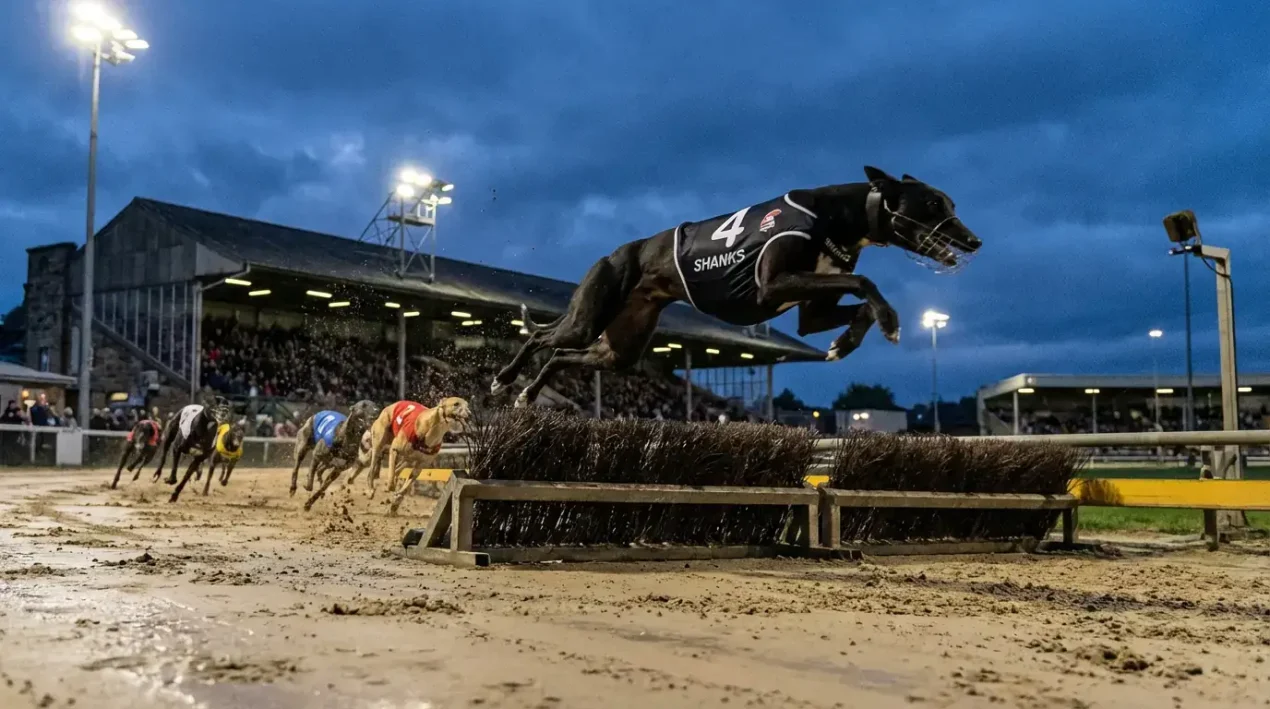
Contents
Greyhound hurdle racing occupies a distinct niche within the sport. The dogs jump four low hurdles during the race — roughly ankle height to a human but a genuine athletic challenge for an animal sprinting at close to forty miles per hour. The hurdling element adds a dimension of skill that flat racing does not test, and it produces a form profile that rewards specialist knowledge. Punters who understand the nuances of hurdle racing often find less competition in the market and, consequently, better value than in the more heavily analysed flat races. Find more race type guides at greyhoundbettingsystem.
Hurdling is a smaller part of the overall greyhound racing calendar, which means the form pool is shallower and the coverage is thinner. That scarcity creates opportunity. The dogs that excel over hurdles are not always the best flat racers, and the skills required — the ability to jump cleanly without losing stride, to recover quickly from an awkward hurdle, to maintain concentration over a longer trip — are not fully captured by standard flat form. Punters willing to invest time in studying hurdle-specific form gain an analytical edge that general form readers do not possess.
What Makes a Good Hurdle Dog
Not every fast greyhound makes a good hurdler. Jumping requires a specific combination of agility, timing, and mental composure that some dogs possess naturally and others never develop. The best hurdle dogs are typically medium-sized, athletic animals with good coordination and an even temperament. Very large, powerful dogs can clear the hurdles through sheer momentum but sometimes lose rhythm, while very lean dogs may lack the physical robustness to handle the repeated impact of landing at speed.
The most important quality in a hurdle dog is consistency at the obstacles. A dog that clears all four hurdles cleanly, maintaining its stride pattern and speed, holds an enormous advantage over one that stutters, clips the top, or loses a stride at each hurdle. Over four obstacles, even a small loss of momentum at each adds up to several lengths of disadvantage by the finish. Watching replay footage of hurdle races reveals these differences far more clearly than the racecard, because the form figures for hurdle races often obscure the in-running picture.
Flat form provides a baseline for assessing hurdle potential but should not be over-relied upon. A dog with impressive flat speed might be hopeless over hurdles if it lacks jumping technique, while a modest flat performer with natural hurdling ability can outperform faster rivals. The transition from flat to hurdles is unpredictable, and early hurdle form — even just one or two runs — is far more informative than an extensive flat record for assessing a dog’s chances over obstacles.
Experience matters disproportionately in hurdle racing. Dogs that have run over hurdles multiple times develop timing and technique that novice hurdlers lack. The first hurdle run is often the most informative single piece of data for a new hurdler, because it reveals whether the dog takes to jumping naturally or struggles with the additional demand. Backing experienced hurdlers against less-proven rivals is one of the simplest and most effective strategies in this discipline.
Major Hurdle Events
The greyhound hurdle calendar includes several prestigious events that attract the best specialist dogs. The Greyhound Grand National is the most famous, carrying historical weight and public recognition that exceeds almost any other event in the hurdle calendar. It is typically run over an extended distance with all four hurdles, testing both jumping ability and stamina in a combination that is unique to this event.
The Champion Hurdle was historically another flagship competition that identified the best hurdler of the season. It was held at various venues including Wimbledon and Towcester before its final running at Crayford Stadium in 2023, after which the event ceased following Crayford’s closure in 2024. When active, the qualifying rounds for the Champion Hurdle provided useful head-to-head form that simplified the assessment of the later stages, similar to the knockout format used in the flat Derby.
Individual tracks also host their own hurdle events throughout the season, providing regular racing for the hurdle specialist population. These track-level events tend to have smaller fields and shorter distances than the major competitions, but they serve an important function in building hurdle form profiles for dogs moving towards the bigger events. Following dogs through these stepping-stone races gives you a clear picture of their jumping development and competitive trajectory.
The hurdle season has a defined calendar, with the major events concentrated in the autumn and winter months. This seasonal concentration means that hurdle form from earlier in the season becomes increasingly valuable as the major events approach, and dogs that have been campaigned steadily through the qualifying rounds arrive at the showpiece events with well-established form profiles.
Betting on Hurdle Races
The primary adjustment for hurdle race betting is to prioritise jumping form over flat speed. A dog that clears hurdles consistently is a better betting proposition than a faster dog that clips the top of every obstacle, because the time lost at hurdles accumulates and the risk of a fall or stumble is concentrated in the less fluent jumper. When two dogs have similar overall form but one is a cleaner hurdler, the cleaner jumper is the stronger selection at equal odds.
Trap draw matters in hurdle racing but in a slightly different way from flat races. The first hurdle typically comes early in the race, before the field has fully separated, which means dogs in outside traps may face crowding at the first obstacle. Faster breakers from inside draws can establish a clear run at the hurdles without interference, compounding their early pace advantage with a cleaner jumping path. Inside draws at hurdle tracks carry a modest additional premium compared to flat racing at the same venue.
Distance is particularly relevant in hurdle assessment. Longer hurdle races test stamina and jumping endurance — the ability to clear the fourth hurdle as cleanly as the first after covering significant distance at speed. Dogs that are flat-track sprinters sometimes struggle over the longer hurdle trips because the combined demand of jumping and sustaining pace over distance exceeds their physical capacity. Conversely, dogs with moderate flat speed but excellent stamina and consistent jumping can dominate longer hurdle events where their advantages compound.
The market for hurdle races tends to be less efficient than for flat racing because fewer punters specialise in the discipline. This means that prices can be more generous for knowledgeable bettors, but it also means that the available form data is thinner and the sample sizes for statistical analysis are smaller. Balancing the value opportunity against the increased uncertainty requires a slightly more conservative staking approach than flat racing, with the understanding that the lower competition in the market compensates for the higher analytical difficulty.
Injury and Risk Considerations
Hurdle racing carries inherently higher injury risk than flat racing. The impact of landing at speed, repeated four times per race, places stress on joints and tendons that flat racing does not. Falls, though relatively uncommon, can cause serious injury, and even dogs that avoid falls may accumulate wear from the repeated jumping impact over a career.
For punters, this elevated risk has two implications. First, dogs returning from a break after a hurdle injury should be assessed cautiously. The physical issue may have resolved, but the dog’s confidence at the hurdles may have been affected, and a previously fluent jumper can become hesitant after a fall. Second, older hurdle dogs — those beyond their third birthday — may begin to show the accumulated effects of jumping, manifesting as slower times, less fluent hurdling, or a reluctance to attack the obstacles with their earlier enthusiasm.
Monitoring the veterinary comments and post-race reports for hurdle dogs adds a layer of information that is less critical for flat racing. A clean bill of health after each hurdle run indicates a dog that is handling the demands of jumping well. Any mention of lameness, stiffness, or jumping irregularities should prompt caution in future assessments, even if the dog’s form figures remain superficially decent. Also read our greyhound race grades guide.
Hurdle racing is a specialist discipline that rewards specialist knowledge. The combination of jumping skill, flat speed, stamina, and experience creates a unique form profile that does not translate directly from flat analysis. Punters who invest the time to study hurdle-specific form, follow the major events, and develop an eye for jumping quality hold a genuine edge in a market where most participants are applying flat-racing logic to a different sport. The hurdles are small. The analytical advantage does not have to be.
