
Greyhound Betting Software and Tools: What Actually Helps
Best Greyhound Betting Sites – Bet on Greyhounds in 2026
Loading...
Contents
The gap between a punter with a pen and a racecard and a punter with a spreadsheet, a form database, and a set of automated alerts is significant. Not because technology replaces judgment — it does not — but because it handles the repetitive, time-consuming tasks that would otherwise eat into the hours available for actual analysis. Sorting through sectional times for 48 dogs across eight races is tedious by hand and trivial with the right tool. The punter who automates the grunt work has more time and energy for the decisions that actually require thought.
The greyhound betting software market is smaller and less developed than its horse racing equivalent, but it has matured considerably in recent years. From dedicated form analysis platforms to simple spreadsheet templates, the tools available range from free to professional-grade. Knowing what exists, what it does, and whether it is worth your time or money is the starting point.
Form Analysis Platforms
Several online platforms provide structured greyhound form data that goes beyond what the standard racecard offers. These services aggregate results, calculate statistics, and present the information in formats designed for betting analysis rather than casual browsing.
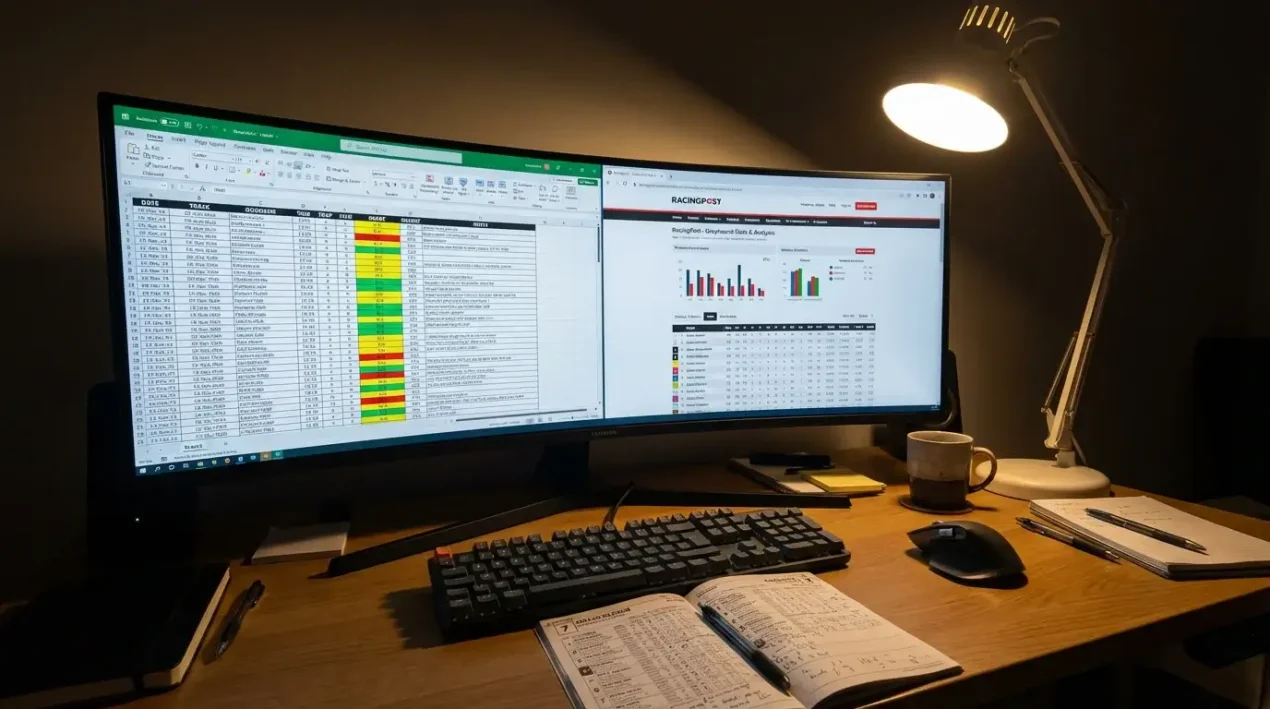
The Racing Post remains the most widely used source for greyhound form in the UK. Its racecard format is comprehensive, showing recent runs, sectional times where available, trainer information, and race comments. The digital version allows filtering and comparison in ways that the printed card does not, and the archive of historical results provides the raw material for longer-term analysis. Access to the full greyhound service typically requires a subscription, but the depth of data available justifies the cost for regular punters.
Dedicated greyhound statistics services offer more granular analysis than general racing platforms. These specialist tools typically provide trap bias statistics by track and distance, trainer strike rates filtered by venue, historical sectional time comparisons, and grade-level performance data. The specificity of the analysis saves hours of manual calculation and presents patterns that would be difficult to identify without aggregated data.
GBGB publishes official race results and some statistical data through its website, providing a primary source that other platforms build upon. While the GBGB site is not designed as a betting tool, the official nature of its data makes it a reliable foundation for any analysis. Cross-referencing data from commercial platforms against the official GBGB record is good practice when accuracy matters.
The value of any form platform depends on how you use it. A subscription to a premium service is wasted if you only glance at the headlines. A free service is invaluable if you systematically mine its data for insights. The tool matters less than the discipline of using it consistently and interpreting its output with a critical eye.
Building Your Own Spreadsheet
For many successful greyhound punters, the most important analytical tool is a spreadsheet they built themselves. A personal tracking spreadsheet captures exactly the data points you consider important, in the format that suits your workflow, without the constraints or assumptions of a commercial product.
The minimum viable betting spreadsheet records every bet you place: date, track, race, selection, trap, odds taken, stake, result, and profit or loss. This basic structure allows you to calculate your overall ROI, strike rate, and profit by track, by bet type, and by any other category you choose to tag. These metrics are the foundation of honest self-assessment. Without them, you are guessing about whether your approach works.
More advanced spreadsheets incorporate form data for prospective selections. Recording sectional times, trap draw, running style, grade, and trainer for dogs you are considering lets you look back at previous selections and identify what factors correlated most strongly with winners. Over time, this self-generated database reveals your own analytical strengths and weaknesses more clearly than any external tool can.
Conditional formatting and simple formulas can automate basic analysis. Highlighting dogs whose early pace split is in the top two for the race, flagging trap draw mismatches, or calculating implied probabilities from bookmaker odds are all achievable with basic spreadsheet skills. You do not need programming expertise to build a useful analytical tool — just a willingness to maintain it consistently and update it after every meeting you follow.
The discipline of maintaining a spreadsheet is as valuable as the data it contains. The act of recording each bet forces a moment of reflection. Writing down why you backed a dog, not just which dog you backed, creates an analytical diary that improves decision-making over time. Punters who keep detailed records invariably make better selections than those who rely on memory and instinct alone.
Automation, Bots, and Alerts
At the more technical end of the spectrum, some punters use automated tools that monitor odds, flag value opportunities, or even place bets based on predefined criteria. These tools range from simple price alert services to sophisticated betting bots that interact with exchange APIs.
Odds comparison and alert tools monitor bookmaker prices across multiple operators and notify you when a specific dog reaches a target price or when a significant market movement occurs. These tools are particularly useful for punters who take early prices and want to lock in value without sitting in front of a screen all morning. Setting a target price based on your form assessment and letting the alert system tell you when it is available is an efficient workflow that separates analysis time from execution time.
Betting bots — automated programs that place bets based on algorithmic criteria — are used by a small number of technically proficient punters, primarily on exchanges. These bots can execute strategies like laying the favourite at specific odds, backing dogs that meet certain form criteria, or managing a dutching portfolio across multiple races simultaneously. Building and maintaining a betting bot requires programming skills and a thorough understanding of the exchange API, which places this approach firmly in the advanced category.
The risk with automation is over-reliance. A bot executes the strategy it is programmed with, regardless of whether conditions have changed. A form analysis tool only analyses the data it has been given, not the information it lacks. Automated tools enhance human judgment but do not replace it, and the punter who treats automation as a hands-off profit machine is eventually surprised by the market conditions the algorithm was not designed to handle.
Choosing the Right Tools
The best tools for greyhound betting are the ones you actually use. A premium subscription to a form database is worthless if it sits untouched. A simple spreadsheet updated after every bet is priceless if it drives genuine analysis and improvement. The choice between tools should be guided by your level of engagement, your technical comfort, and the specific gaps in your current workflow.
For beginners, start with a free racecard source and a basic spreadsheet for tracking bets. This combination costs nothing and provides the essential infrastructure for disciplined betting. Add a form database subscription once you are confident that your engagement level justifies the cost.
For intermediate punters, invest in a specialist statistics service that provides trap bias data, trainer analysis, and sectional time comparisons. The time saved on manual calculation pays for the subscription many times over. Build your spreadsheet into a genuine analytical tool with form data fields, not just a bet log.
For advanced punters, explore automation options that complement your existing analysis. Price alerts, odds monitoring, and exchange APIs extend your reach without requiring constant screen time. But always maintain manual oversight — the best automated system is one that flags opportunities for a human to evaluate, not one that operates unsupervised.
Technology does not create an edge in greyhound betting. Knowledge, discipline, and consistent execution create the edge. Technology simply makes those things more efficient, more scalable, and less prone to the manual errors that creep in when you are tracking form across twelve races on a Tuesday evening. Use the tools. But never mistake the tool for the skill.