
Greyhound Tote Betting: Pool Wagering Explained
Best Greyhound Betting Sites – Bet on Greyhounds in 2026
Loading...
Contents
Most greyhound betting in the UK is fixed-odds: you take a price, the dog wins, you get paid at that price. Tote betting works differently. Your stake goes into a pool with every other punter’s money, the operator takes a percentage, and the remainder is divided among winning tickets. The payout is not known until after the race, and it depends entirely on how much money was wagered and how it was distributed across the runners. It is a fundamentally different model from bookmaker betting, and it carries advantages that most punters overlook.
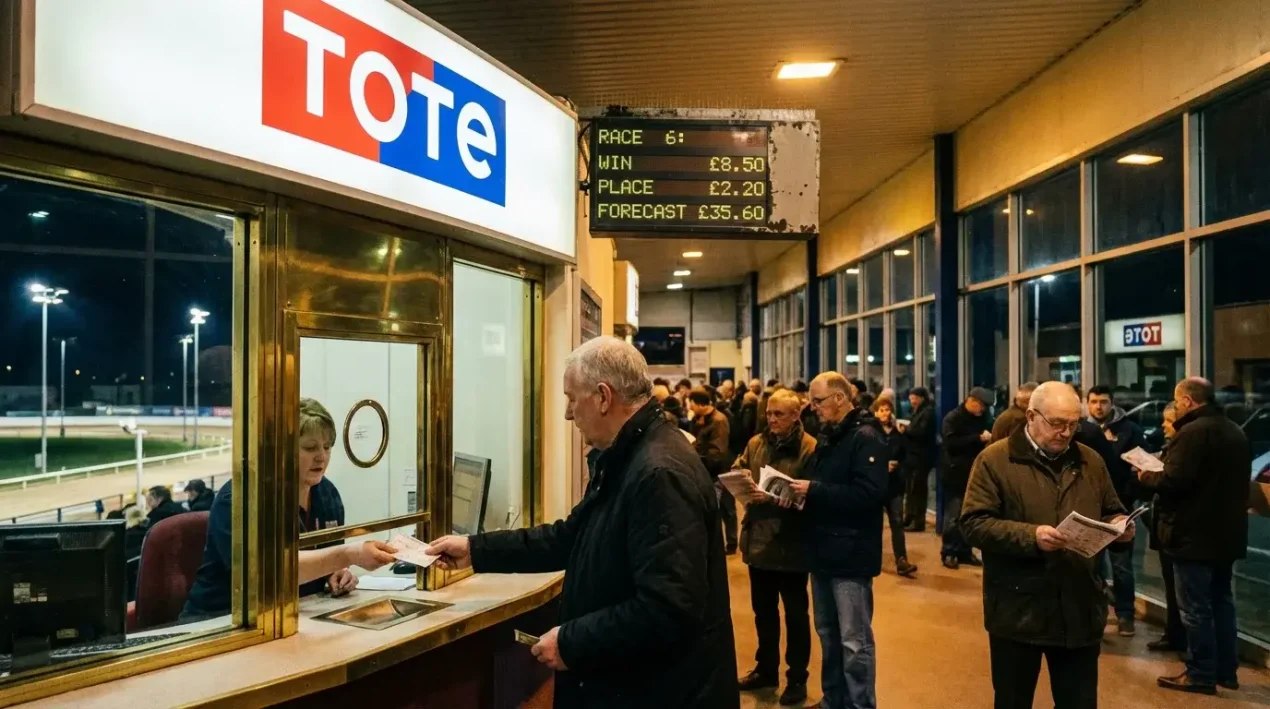
Tote pools have been a feature of UK greyhound racing since the sport’s early days, and they remain the primary betting method at the track itself. Off-course, tote betting is available through online platforms, though it attracts less attention than fixed-odds markets. Understanding how pool betting works and when it offers better value than the bookmaker is a useful addition to any greyhound punter’s toolkit.
How Pool Betting Works
The mechanics of tote betting are straightforward. All stakes placed on a particular bet type in a particular race go into a single pool. After the race, the tote operator deducts a percentage — the takeout — and distributes the remaining money among the winning tickets in proportion to their stake. The result is expressed as a dividend: the amount returned per one-pound winning unit.
The takeout percentage varies by bet type and operator but typically falls around 25 to 34 percent for greyhound pools, with some operators offering promotional reductions on specific events. Win pools may carry lower takeouts than exotic pools like forecasts and tricasts. This takeout is the tote’s equivalent of the bookmaker’s overround — it is the operator’s margin, and it is non-negotiable.
The dividend is determined by the distribution of money across the runners. If a heavily backed favourite wins, the pool is shared among many winning tickets, producing a small dividend. If a lightly backed outsider wins, the pool is shared among fewer winners, producing a large dividend. This creates a direct relationship between public betting patterns and the value offered by the tote: the less popular a winning selection, the better the tote pays.
This is where the critical difference from fixed-odds betting emerges. With a bookmaker, the price is set before the race and reflects the bookmaker’s assessment of probability plus margin. With the tote, the effective price is determined by other punters’ behaviour. If the crowd overloads the favourite, the tote dividend on that favourite will be poor — but the tote dividend on every other dog in the race will be enhanced, because the money that went on the favourite effectively subsidises the payout to holders of less popular selections.
The implication for sharp punters is that the tote can offer better value than the bookmaker on unpopular dogs — precisely the selections that value betting identifies as mispriced. When your form analysis leads you to a dog that the public is ignoring, the tote dividend may exceed the bookmaker’s fixed odds because fewer punters have backed your selection in the pool.
Tote-Only Bet Types
Beyond standard win and place pools, the tote offers several bet types that are not available through fixed-odds bookmakers. These exotic bets are pool-exclusive and carry the potential for very large returns, balanced against the difficulty of landing them and the higher takeout percentages applied.
The Exacta requires you to predict the first two finishers in exact order — functionally identical to a straight forecast, but settled as a pool dividend rather than a computer-calculated payout. The Exacta pool dividend can differ significantly from the bookmaker’s forecast return, sometimes favourably, sometimes not. Comparing the likely Exacta dividend with the estimated CSF return before choosing which to bet is a worthwhile habit.
The Trifecta asks for the first three finishers in order — the tote equivalent of a tricast. As with the Exacta, the dividend depends on the pool distribution and can exceed the bookmaker’s tricast payout when the result involves selections that the pool has underweighted.
Jackpot and Pick Six bets require you to select the winner of multiple consecutive races — typically six. These are high-difficulty, high-reward pools that can accumulate substantial prize funds, particularly when the jackpot rolls over from previous meetings without a winner. The probability of landing a Pick Six is extremely low, but the dividends when nobody else has the combination can be life-changing. These bets are recreational by nature, and staking should reflect that.
Placepot pools require a placed selection in each of a series of races — usually the first six on a card. This is more achievable than a Jackpot because place terms are more forgiving than win requirements, and the Placepot attracts a loyal following among greyhound punters who enjoy the sustained engagement of following their selections across a full card.
Track Pools Versus Online Tote
Tote pools at the track operate independently from off-course pools, and the dividends can differ. Track pools are typically smaller because the on-course crowd is limited, which means the dividends are more volatile — a single large bet can significantly shift the payout. Off-course tote pools, accessed through online platforms, aggregate bets from a wider base and tend to produce more stable dividends.
Betting at the track has the advantage of atmosphere and the ability to watch the dogs in the parade ring before committing. Some experienced punters value the visual assessment of a dog’s condition — its demeanour, its weight, how it walks to the traps — as a final check before betting. This information is only available on-course and can occasionally provide an edge that remote punters lack.
Online tote betting is more convenient and offers access to pools at every GBGB meeting without the need to attend. The larger pool sizes mean that your bet has less impact on the dividend, which is an advantage when you are backing an unpopular selection — a large bet in a small track pool can collapse the dividend on your own selection, effectively reducing your own return. In a larger off-course pool, this self-defeating effect is minimised.
Some online platforms offer guaranteed minimum dividends or consolidate pools across multiple operators to increase pool size. These features improve the tote betting experience and reduce the volatility that can make small on-course pools frustrating. Checking which platform offers the best pool terms for greyhound tote betting is a useful piece of housekeeping.
When Tote Betting Offers an Edge
The tote’s primary advantage over fixed-odds betting is in races where public money is concentrated on one or two dogs, inflating their share of the pool and leaving the remaining dogs underrepresented. When the favourite is overbacked, every other dog in the race offers a better tote dividend than the fixed-odds price, because the pool’s distribution has been skewed by the weight of money on the market leader.
Identifying these situations requires a view on whether the favourite is genuinely the most likely winner or merely the most popular bet. If your analysis suggests the favourite is overrated — perhaps it is stepping up in grade, or its recent form is flattered by favourable draws — the dogs you prefer instead are likely to pay better through the tote than through the bookmaker, because the public money has gone elsewhere.
Exotic tote pools like the Exacta and Trifecta can offer exceptional value when the result involves an outsider. Because fewer punters include outsiders in their exotic combinations, a forecast or tricast involving an unexpected finisher can pay substantially more through the tote pool than through the bookmaker’s computer-calculated equivalent. For punters who specialise in spotting undervalued outsiders, the tote’s exotic pools are a natural hunting ground.
The tote also eliminates the risk of having your account restricted. Bookmakers can and do limit or close accounts of consistently profitable punters. The tote, as a pool system, does not identify or penalise winning bettors because the pool mechanism treats all money equally. For punters who have experienced bookmaker restrictions, the tote offers an unrestricted alternative that, in the right circumstances, provides competitive or superior value.
Pool betting is neither better nor worse than fixed-odds betting as a blanket rule. It is a different mechanism with different strengths, and the punter who understands both systems and switches between them based on which offers better value in each specific race has a flexibility that single-system bettors lack. The tote is not the main event for most greyhound punters, but it is a useful supporting act that occasionally steals the show.